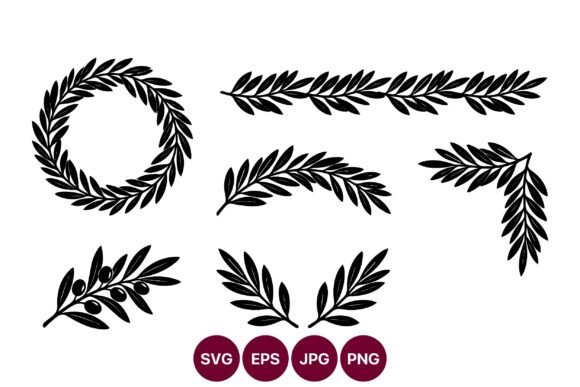
Laurel Olive Branch Vector Line Art: Elevating Brand Identity with Timeless Symbolism
In the crowded landscape of digital design, simplicity often speaks the loudest. There is a distinct power in stripping an image down to its essential lines, creating a visual that is both elegant and universally understood. This is where Laurel Olive Branch Vector Line Art becomes an invaluable asset for designers, business owners, and creative professionals. These assets are not merely decorative; they are functional tools that carry centuries of cultural weight while offering modern technical versatility. Whether you are launching a new skincare brand or designing a certificate for a prestigious award, these line art elements provide a sophisticated foundation that stands the test of time.
The Intersection of Ancient Symbolism and Modern Design
Before diving into how to use these graphics, it helps to understand why they resonate so deeply. The laurel wreath and the olive branch are among the most recognized symbols in human history. The laurel, traditionally associated with victory, honor, and achievement, was worn by Roman emperors and Olympic champions. The olive branch, conversely, has long represented peace, reconciliation, and prosperity. When you incorporate Laurel Olive Branch Vector Line Art into your work, you are tapping into this subconscious library of meaning. You aren't just adding a picture; you are communicating values like success, tranquility, and prestige without saying a word.
This symbolic depth makes these vector elements particularly effective for brands that want to project authority and trustworthiness. In an era where consumers are bombarded with flashy, complex imagery, the clean, high-contrast aesthetic of black line art cuts through the noise. It suggests confidence—a brand that knows exactly who it is and doesn't need excessive ornamentation to prove its worth.
Practical Applications Across Industries
The true value of a versatile asset set lies in its ability to adapt to various real-world scenarios. Let's explore how different sectors can leverage these specific design elements to solve common branding challenges.
Corporate and Legal Branding
For law firms, consultancies, and financial institutions, the visual language must convey stability and expertise. A logo featuring a laurel wreath instantly signals competence and a track record of success. Because the artwork is available in vector SVG and EPS formats, it remains razor-sharp whether printed on a massive billboard or embossed on heavy cardstock letterheads. The high-contrast black lines ensure legibility even when scaled down to fit on a business card or a favicon. This scalability is crucial for corporate identities that must maintain consistency across dozens of touchpoints.
Wellness and Organic Products
The wellness industry thrives on natural imagery. An olive branch is the perfect metaphor for organic ingredients, holistic health, and eco-conscious practices. Imagine a packaging label for a premium olive oil or a line of natural soaps. Using a delicate line art border creates a sense of purity and craftsmanship. Unlike photographic images, which can sometimes look cluttered on small labels, the clean lines of these vector graphics allow text and other product details to breathe. The inclusion of PNG and JPG files in the download package also means you can quickly mock up packaging designs for client presentations without needing advanced vector software immediately.
Education and Academic Institutions
Schools, universities, and training organizations frequently need imagery that represents graduation and achievement. Certificates, diplomas, and academic seals rely heavily on the laurel motif. With a set of editable vector elements, designers can create custom borders that frame text elegantly. The ability to manipulate individual lines allows for unique variations—perhaps intertwining the branches with the institution's initials or adjusting the density of the leaves to match a specific color palette. This flexibility ensures that every document feels bespoke rather than generic.
Hospitality and Event Planning
Wedding planners and luxury hotels often require decor that feels timeless. These line art elements work beautifully as watermark overlays on invitations, menus, and signage. The monochromatic nature of the black line art means it pairs effortlessly with any color scheme, from pastel blushes to deep navy blues. For event stations, printing these patterns on table runners or napkins adds a layer of sophistication that elevates the guest experience. Since the files are provided in a convenient ZIP folder, teams can easily access the right format for large-format printing or digital projection.
Technical Advantages for Professional Workflows
While the aesthetic appeal is significant, the technical specifications of this asset set are what make it a practical choice for professional workflows. The inclusion of multiple file formats addresses the diverse needs of modern production environments.
- SVG (Scalable Vector Graphics): Ideal for web design. SVG files are lightweight and resolution-independent, ensuring that logos and icons load quickly and display perfectly on high-resolution Retina screens and mobile devices alike.
- EPS (Encapsulated PostScript): The standard for print production. If you are working with offset printers or large format vendors, the EPS file ensures that your vectors can be imported into Adobe Illustrator or InDesign without losing quality or path data.
- PNG and JPG: Perfect for quick integrations. Sometimes you don't need to edit the vector paths; you just need to place an image into a presentation slide, a social media post, or a website banner. Having pre-rendered raster versions saves time during the initial concept phase.
The emphasis on high-contrast design is another critical feature. In many design situations, especially when using these elements as borders or background patterns, clarity is paramount. High contrast ensures that the intricate details of the leaves and stems do not get lost against busy backgrounds or when printed in single-color ink. This reliability reduces the risk of errors during the printing process, saving both time and money.
Strategic Considerations Before Implementation
While these assets are powerful, successful integration requires thoughtful application. Here are a few considerations to keep in mind before finalizing your design.
Context Matters: Ensure the symbolism aligns with your message. While a laurel wreath implies victory, it can feel overly formal or aggressive in contexts requiring softness or playfulness. Conversely, an olive branch might be too subtle for a brand trying to make a bold, disruptive statement. Match the mood of the symbol to the voice of your brand.
Color Adaptation: Although the source files are black line art, one of the strengths of vector formats is their editability. You can easily recolor the strokes to match your brand guidelines. However, remember that thin lines may disappear if placed over dark backgrounds. Always check the visibility of your design in both light and dark modes, especially for digital applications.
Balance and Spacing: When using these elements as borders or decorative patterns, avoid overcrowding. The beauty of line art lies in its negative space. Allow the design room to breathe so that the intricate details of the branches and leaves can be appreciated. Overuse can turn an elegant accent into visual clutter.
Empowering Creative Freedom
Ultimately, the goal of using Laurel Olive Branch Vector Line Art is to enhance communication, not to complicate it. By providing a robust toolkit that includes scalable vectors and ready-to-use raster images, these resources empower creators to focus on the bigger picture—the story they are telling and the emotion they wish to evoke. Whether you are a graphic designer refining a logo, a marketer preparing a campaign, or a business owner establishing a visual identity, these timeless elements offer a reliable way to convey excellence, peace, and achievement. They bridge the gap between historical tradition and contemporary design needs, proving that sometimes the most effective solutions are the ones that have worked for thousands of years.